Ring Size Guide
A wedding band is the rare object you never take off — worn through work and sleep, for years at a stretch. Which makes the fit worth the few quiet minutes it takes to find. And because every EON band is cut to order, there is no off-the-shelf size to settle for. Only yours.
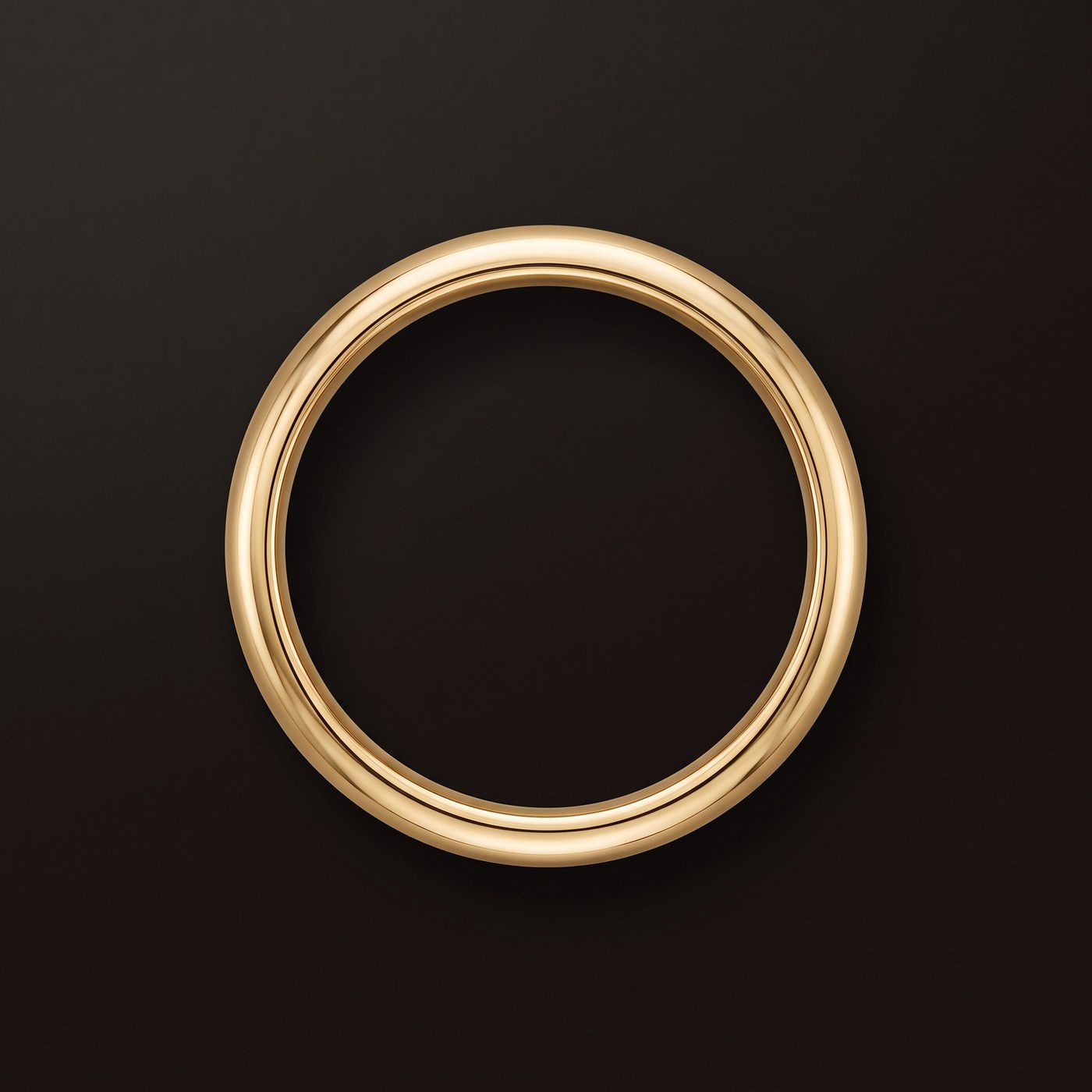
How to measure your ring size at home
Method 1 · Paper strip
- Cut a thin strip of paper or string about 10 cm long.
- Wrap it snugly around the base of the finger you'll wear the ring on.
- Mark where the strip overlaps, then lay it flat and measure the length in millimeters.
- That length is your inner circumference — match it to the table below.
Method 2 · A ring you already own
Measure the inside diameter of a ring that already fits, edge to edge, in millimeters, and match it to the table.
US ring size to millimeters
| US size | Inner diameter | Inner circumference |
|---|---|---|
| 4 | 14.9 mm | 46.8 mm |
| 5 | 15.7 mm | 49.3 mm |
| 6 | 16.5 mm | 51.9 mm |
| 7 | 17.3 mm | 54.4 mm |
| 8 | 18.1 mm | 57.0 mm |
| 9 | 19.0 mm | 59.5 mm |
| 10 | 19.8 mm | 62.1 mm |
| 11 | 20.6 mm | 64.6 mm |
| 12 | 21.4 mm | 67.2 mm |
| 13 | 22.2 mm | 69.7 mm |
Choosing the right fit
Between two sizes? Size up — a ring is easier to wear slightly loose than too tight.
Wider bands sit tighter. For a 6 mm or 8 mm band, such as the Keystone, consider going up a quarter to a half size versus a slim 2–3 mm band.
Comfort fit — EON bands are domed on the inside, which slides over the knuckle more easily and generally fits true to size.
Ring size questions
How do I measure my ring size at home without a sizer?
Wrap a thin strip of paper or string around the base of your finger, mark where it overlaps, and measure that length in millimeters — that is your inner circumference. Match it to the table above to find your US size.
What if I'm between two ring sizes?
Choose the larger size. A band that is a touch loose is far more comfortable than one that is too tight, and knuckles swell slightly in heat and at the end of the day.
Does band width change the size I need?
Yes. Wider bands cover more of the finger and feel tighter, so for a 6–8 mm band go up about a quarter to a half size compared with a slim 2–3 mm band.
Can EON resize my ring?
Yes — resizing is complimentary once within 30 days of delivery. Because each band is made to order, we recommend confirming your size first with the included sizer.
What are the most common ring sizes?
US 6 is the most common women's size and US 9–10 the most common men's, but always measure — hands vary widely.
An heirloom is not bought, it is begun.